

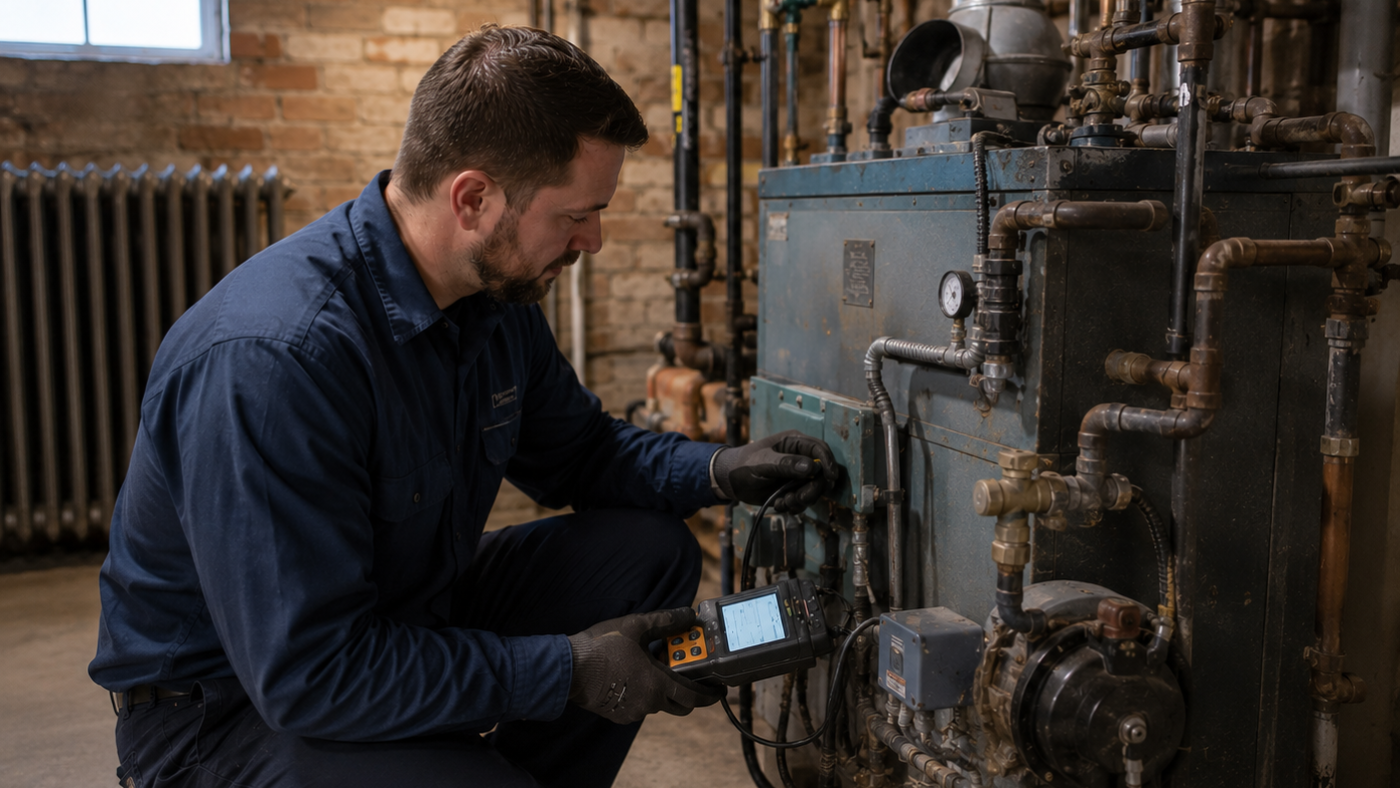
Boiler Installation Guide for Older Homes in Chicago and Nearby Suburbs:
Older Chicago homes have character that newer construction often cannot replicate: brick exteriors, traditional radiators, substantial masonry, and layouts shaped by generations of use. But when the boiler reaches the end of its service life, replacing it is rarely as simple as swapping one piece of equipment for another.
A successful boiler installation in an older home requires understanding the existing piping, radiators, chimney or venting, heating load, and controls as one connected system. For homeowners across Chicago and nearby suburbs, Service Pro Titans provides residential heating and cooling services designed around the property’s needs rather than a one-size-fits-all replacement.
Here is what homeowners should know before installing a new boiler.
Why Boiler Replacement Is Different in an Older Chicago Home
Boilers remain especially relevant in Chicago’s older housing stock. Many properties were built around steam or hot-water radiator systems rather than modern forced-air ductwork.
The U.S. Department of Energy has studied older hydronically-heated buildings in the Chicago area and found that problems such as improperly configured flow rates, piping limitations, water temperatures, and system imbalance can contribute to uneven temperatures and unnecessary energy consumption. In one Chicago-area field project, a hydronic system improvement reduced the average temperature spread between units from 22.1°F to 15.5°F.
That illustrates an important point: the boiler itself is only part of the heating system.
Before replacement, an HVAC professional should evaluate how the entire system currently operates.
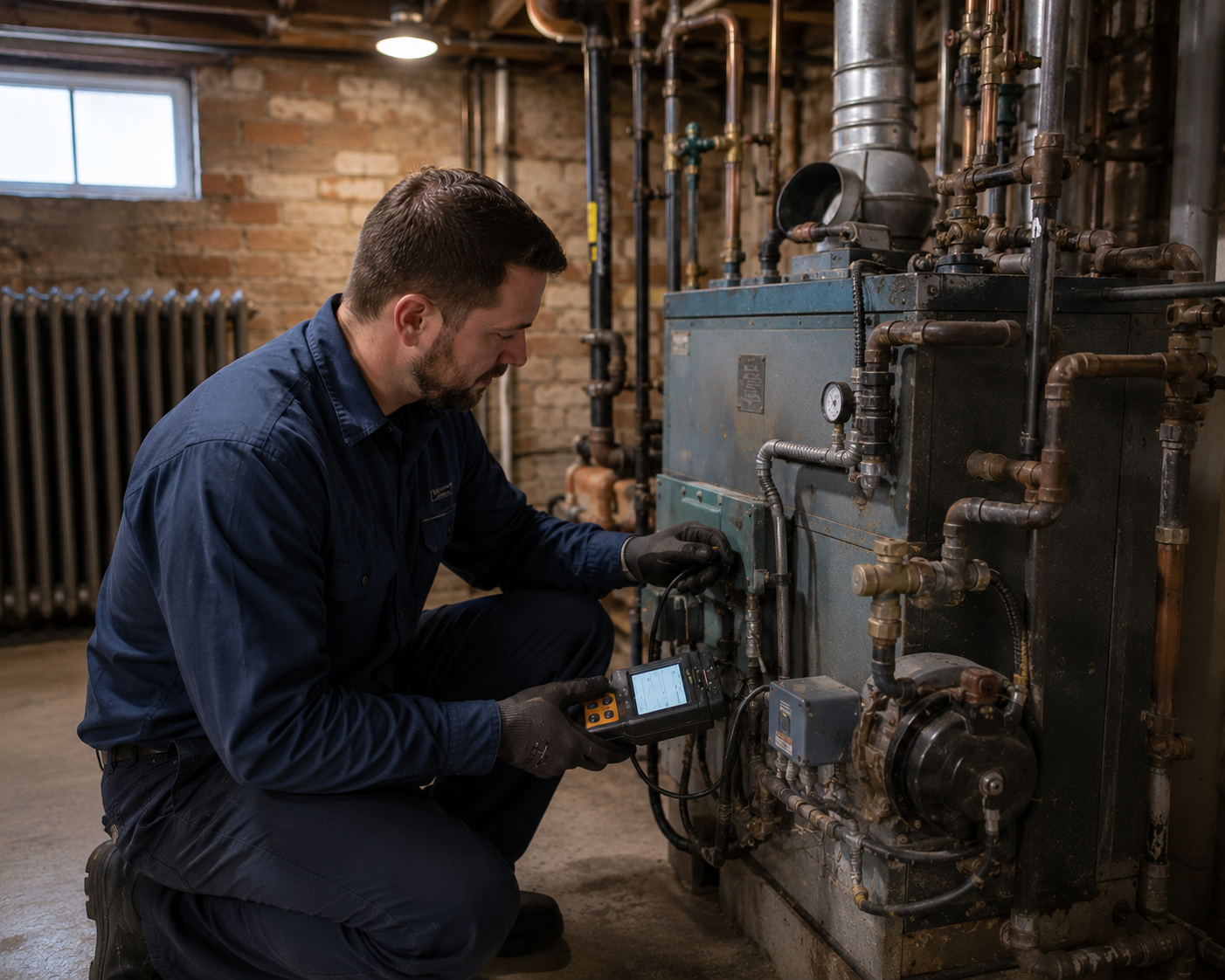
HVAC technician inspecting an older home boiler system in Chicago before installation.
Step 1: Determine Whether You Have Steam or Hot-Water Heat
The first step is identifying the system.
A steam boiler heats water until it turns into steam that travels through piping to radiators. A hot-water boiler circulates heated water through radiators, baseboards, or other hydronic emitters.
The distinction matters because the boiler, piping arrangement, operating temperatures, controls, and installation requirements differ.
Homeowners should not assume an older steam system must automatically be converted to hot water. Depending on the house and condition of the existing distribution system, maintaining the original system type may be the more practical solution.
A professional assessment from a Boiler Service & Installation Chicago provider can determine which approach makes sense for the property.
Step 2: Size the New Boiler for the House, Not the Old Boiler
One of the biggest mistakes in boiler replacement is simply matching the capacity of the existing unit.
Older boilers may have been oversized when installed. Meanwhile, the home’s heating requirements may have changed after decades of improvements such as new windows, insulation, air sealing, additions, or renovations.
The Department of Energy recommends selecting boilers based on the calculated design heating load rather than assuming bigger equipment is better.
An oversized boiler may cycle on and off frequently, potentially reducing efficiency and creating inconsistent comfort. Undersized equipment can struggle during Chicago’s coldest weather.
Proper sizing should consider factors such as:
- Home size and layout
- Insulation and air leakage
- Window quantity and condition
- Exterior wall construction
- Existing radiators or baseboards
- Steam versus hot-water distribution
- Building additions and renovations
This evaluation is especially important in century-old homes where the building may have changed substantially since the original heating equipment was installed.
Step 3: Inspect Existing Pipes and Radiators
A new boiler cannot correct every problem caused by aging distribution equipment.
Inspect radiators, valves, pumps, expansion tanks, vents, and decades-old piping before installation.
Corrosion, leaks, poor circulation, trapped air, incorrect radiator venting, or system imbalance can all affect performance. Addressing these problems during the boiler project can help the new equipment deliver more consistent heating.
For homeowners looking for Heating & Cooling in Chicago, this whole-system approach is particularly valuable in older properties.
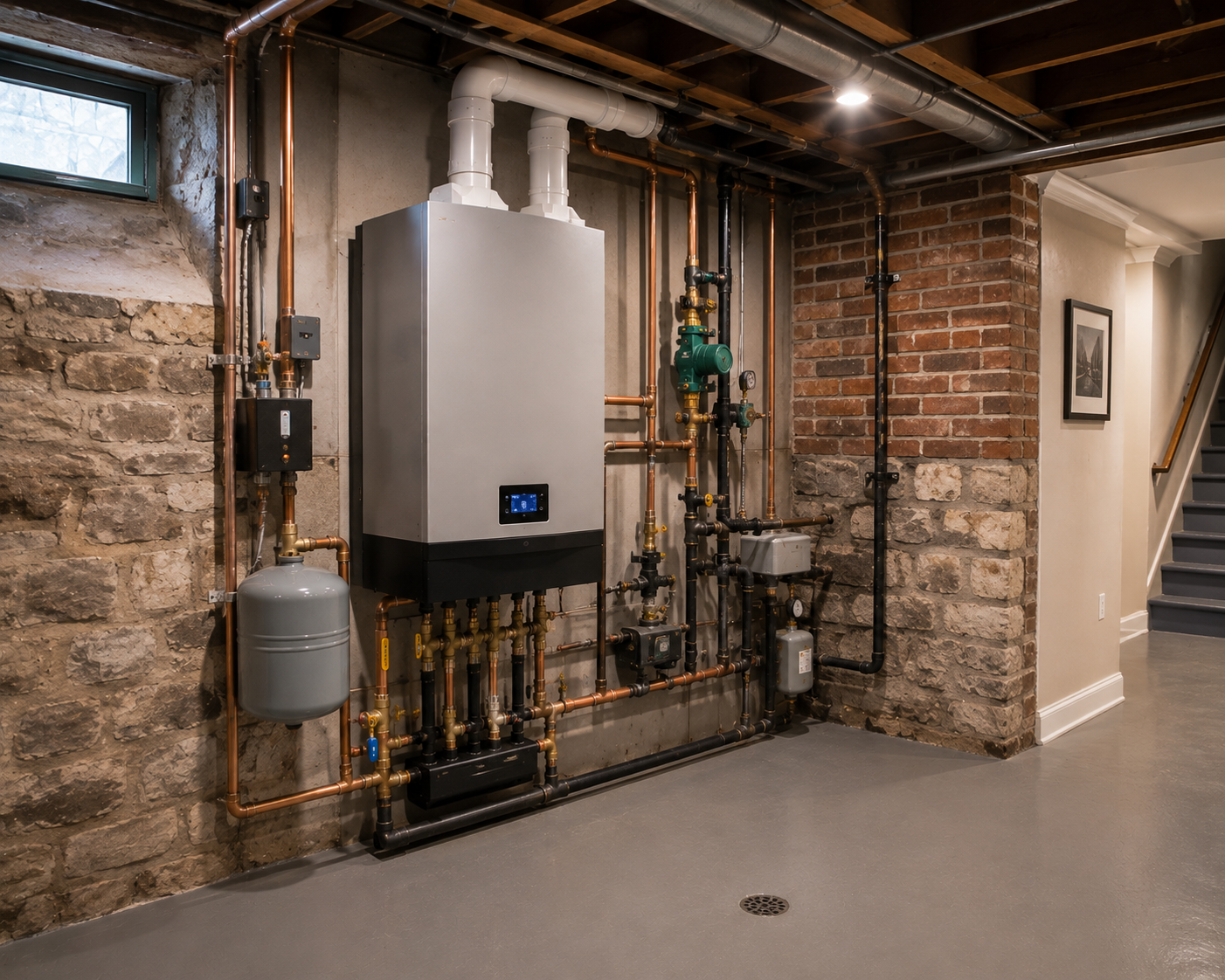
New high-efficiency boiler connected to an older Chicago home hydronic heating system.
Step 4: Evaluate Venting and Chimney Conditions
Replacing an older atmospheric boiler with modern equipment may change how combustion gases are vented.
Some high-efficiency boilers use sealed combustion and direct venting instead of a traditional masonry chimney. DOE guidance notes that high-performance direct-vent boilers can exceed 94% AFUE while exhausting combustion products directly outdoors.
Condensing boilers introduce additional installation considerations. DOE technical guidance notes that these systems produce acidic condensate that must be properly managed and that appropriate venting materials are necessary because of condensation in the flue system.
This is why you should never assume the existing chimney is suitable for a new boiler.
Step 5: Consider Boiler Efficiency in Context
AFUE, or Annual Fuel Utilization Efficiency, estimates how effectively a boiler converts fuel into useful heat over a typical year.
Higher efficiency can reduce wasted energy, but selecting equipment solely because it has the highest efficiency rating can be misleading.
A condensing boiler performs best when the heating system allows sufficiently low return-water temperatures. DOE research notes that features such as outdoor-reset controls and modulating burners can help condensing boilers operate efficiently across changing heating loads.
In an older Chicago home, therefore, contractors should determine whether the existing radiators and piping are compatible with the operating conditions needed to take advantage of the new boiler’s capabilities.
Homeowners considering American Standard HVAC products or other equipment should compare efficiency alongside compatibility, installation requirements, maintenance, and expected heating demand.
Step 6: Review Controls and Zoning
The boiler may be new while the controls are decades old.
Modern thermostats, outdoor-reset controls, zoning strategies, and properly configured circulators can improve how the system responds to changing temperatures.
Control upgrades can make a measurable difference. In a DOE-supported hydronic heating project, upgraded central controls helped reduce heating energy use by an average of 19%.
For Chicago homeowners, better control is especially useful in fall and spring, when outdoor temperatures can change substantially throughout the day.
Step 7: Plan for Permits and Code Requirements
Boiler work must comply with applicable local codes and installation requirements. Chicago’s Department of Buildings maintains boiler inspection and permit records, and certain boiler-related work requires appropriately licensed contractors and permits.
Requirements can differ outside Chicago, so homeowners in nearby suburbs should verify rules for their municipality.
Working with qualified HVAC Professionals Chicago homeowners can rely on helps ensure permitting, venting, combustion safety, equipment clearances, and other installation details are addressed correctly.
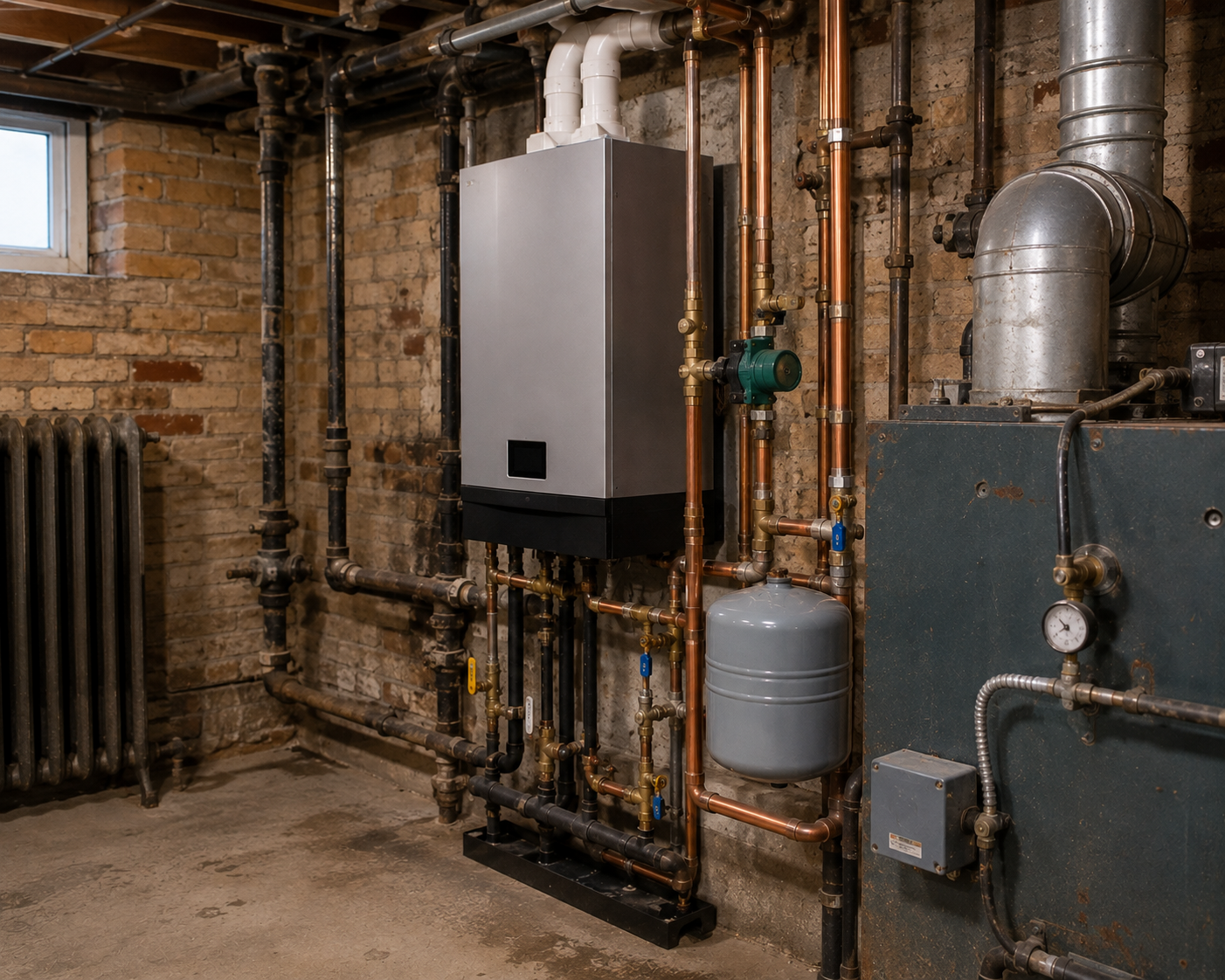
Completed professional boiler installation in an older Chicago-area home.
Questions to Ask Before Approving an Installation
Before moving ahead, ask your HVAC contractor:
- How was the boiler size calculated?
- Is my existing distribution system in good condition?
- Should any radiator valves, vents, pumps, or piping be replaced?
- Can I still use the existing chimney?
- Would a condensing boiler work efficiently with this system?
- Are control or zoning upgrades recommended?
- What permits or inspections are required?
- What ongoing maintenance will the new boiler need?
Clear answers make it easier to compare proposals based on the complete installation, not equipment price alone.
Prepare Your Older Home for Reliable Chicago Heating
Boiler installation in an older Chicago home requires more than choosing a new appliance. The best results come from evaluating the boiler, distribution system, controls, venting, building characteristics, and actual heating demand together.
If your current boiler is unreliable, inefficient, leaking, or approaching replacement, Service Pro Titans can evaluate the system and recommend an appropriate path forward. Visit www.serviceprotitans.com to learn more about Heating & Cooling Chicagoland, including professional boiler installation and heating services.