

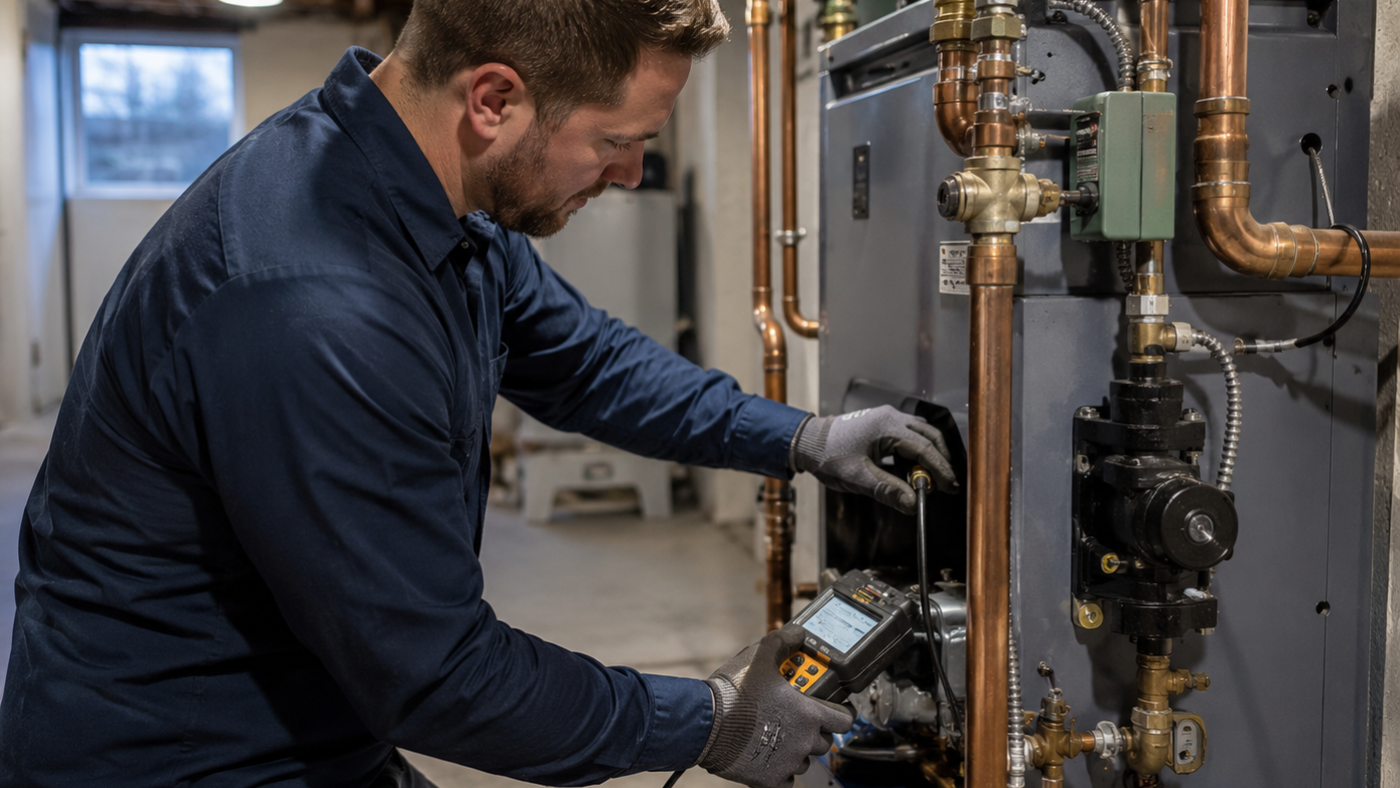
Boiler Repair vs. Boiler Replacement: Which Option Makes More Sense?
A boiler that stops heating your Chicago home on a freezing winter morning creates an immediate question: should you repair the problem, or is it finally time to replace the system?
The answer isn’t determined by the price of today’s repair alone. Boiler age, repair history, efficiency, comfort, reliability, and the likelihood of additional problems all matter. A relatively inexpensive repair can make sense for a healthy boiler, while repeatedly repairing an aging system can become a poor long-term investment.
For Chicago homeowners, Service Pro Titans provides residential and light commercial heating and cooling services, including boiler diagnostics, repairs, and installation. Understanding the factors below can help you make a more informed decision before investing further in your existing system.
When Does Boiler Repair Make Sense?
Not every boiler problem means the equipment has reached the end of its useful life. If the boiler is relatively young, has been properly maintained, and has generally operated reliably, repairing a failed component may be the practical choice.
Boiler repair is often worth considering when:
- The boiler has not required frequent repairs.
- The problem involves a specific replaceable component.
- Replacement parts remain readily available.
- The system still heats the property consistently.
- Energy consumption has not increased significantly.
- The repair cost is reasonable compared with replacement.
Problems involving thermostats, valves, circulator pumps, ignition components, or certain controls may be repairable without replacing the entire heating system.
A professional diagnosis is important because similar symptoms can have different causes. For example, inadequate heating might result from a control problem or circulation issue rather than a major boiler failure.
Homeowners experiencing heating problems can turn to Boiler Service & Installation Chicago to have the system inspected before deciding on the next step.
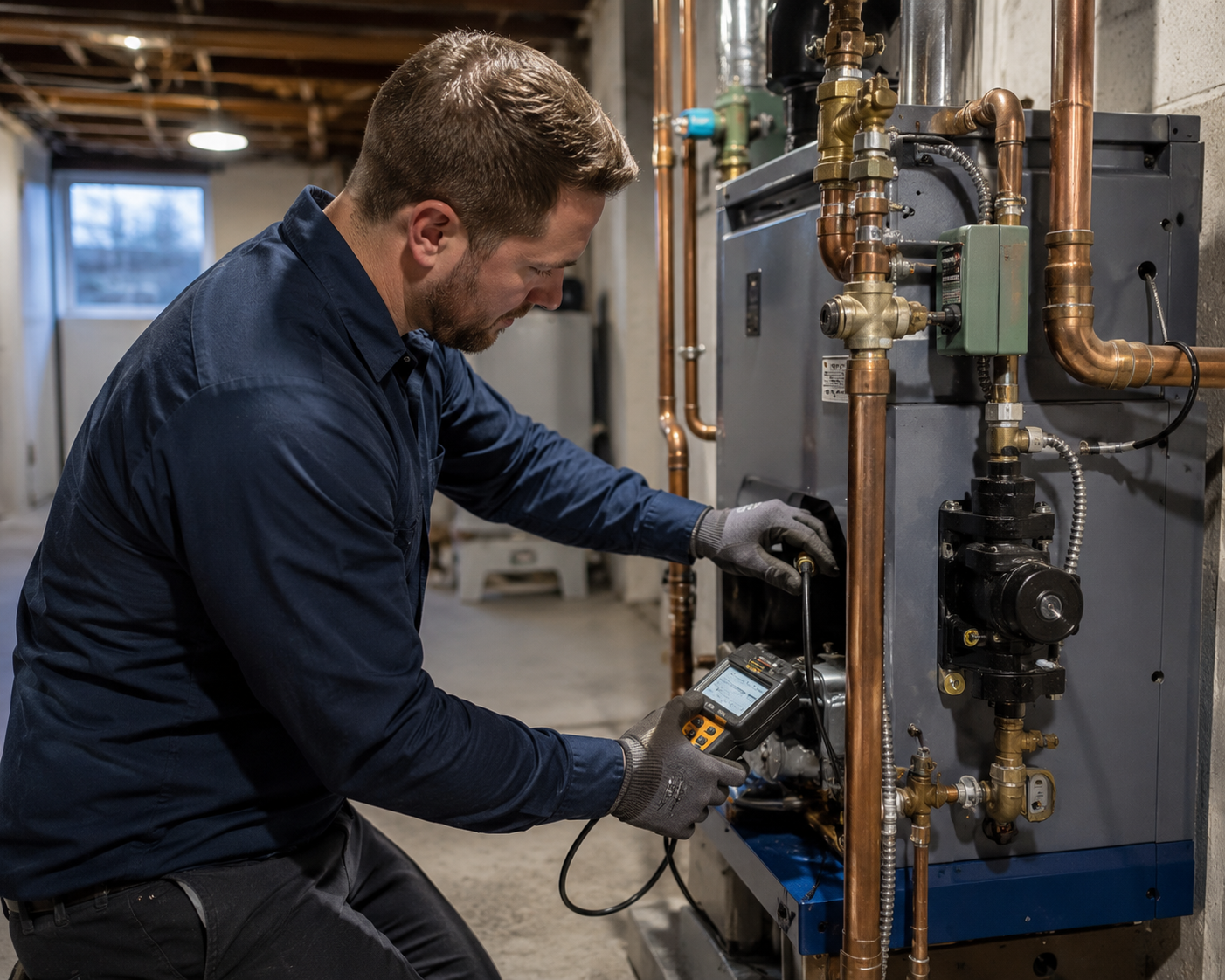
HVAC technician performing residential boiler repair inspection in Chicago
When Should You Consider Boiler Replacement?
Replacement becomes more reasonable when several warning signs appear together.
One of the biggest considerations is age and efficiency. ENERGY STAR currently requires certified residential gas boilers to achieve an AFUE of at least 90%, while certified oil boilers must reach at least 87%. AFUE measures how much of the fuel consumed by a boiler is converted into usable heat over a typical year.
Age alone, however, should not determine the decision. An older boiler that remains reliable may still have useful service life. The larger concern is an older boiler combined with frequent breakdowns, rising operating costs, uneven heating, or increasingly expensive repairs.
Consider replacement when you notice:
- Repairs are becoming frequent.
- Important components are deteriorating.
- Replacement parts are hard to find or costly.
- Heating performance has become inconsistent.
- Energy costs have increased without another clear explanation.
- The boiler struggles to maintain comfortable temperatures.
- A major repair represents a substantial portion of replacement cost.
At that point, continuing to repair the system can mean spending more money without addressing its underlying deterioration.
Boiler Repair vs. Replacement: Compare the Long-Term Cost
Don’t rely on the repair estimate alone.
Suppose an older boiler requires a substantial repair today. Repairing it may cost less upfront, but another component could fail during the next heating season. Several repairs over two or three years can change the economics considerably.
Replacement involves a larger initial investment but can offer more predictable operation and potentially lower heating costs.
The U.S. Department of Energy uses life-cycle cost, rather than purchase price alone, when evaluating energy-efficient boiler options. In one DOE residential gas boiler example, a 90% AFUE model was estimated to produce $1,150 in lifetime energy-cost savings compared with an 84% AFUE model under the study’s assumptions.
The actual savings in a Chicago home will depend on the building, fuel prices, boiler condition, thermostat settings, insulation, and other factors. Still, the example demonstrates why efficiency and future operating expenses belong in the repair-versus-replacement calculation.
Chicago homeowners considering broader heating upgrades can also explore Furnace Service & Installation Chicago and American Standard HVAC options when determining which system best fits their property.
Chicago Weather Makes Reliability Especially Important
Chicago’s climate makes heating reliability more than a convenience.
The region experiences long periods of cold weather, which can require heating systems to operate extensively throughout winter. A boiler that seems adequate during mild fall weather can reveal performance problems once heating demand increases.
This is why the condition of the entire heating system matters.
A boiler that requires repeated service calls, takes longer and longer to heat the home, or produces noticeably uneven temperatures may signal broader deterioration. Waiting for a complete failure can also leave homeowners arranging emergency service during periods of heavy heating demand.
Having HVAC Professionals Chicago inspect an aging system before winter can clarify its condition and remaining serviceability.
Don’t Forget About Boiler Sizing and Installation
If replacement is the better choice, purchasing the highest-capacity boiler available is not necessarily the solution.
Correct sizing matters.
The U.S. Department of Energy recommends improving building efficiency where practical and having a heating contractor properly size a replacement boiler. A properly sized system can operate more efficiently over its lifetime than equipment selected simply by matching an existing boiler’s capacity.
Changes to insulation, windows, air sealing, additions, and other building improvements can also alter heating requirements.
Professional Heating & Cooling in Chicago services can help homeowners evaluate equipment based on the property’s actual heating needs rather than automatically duplicating the old system.
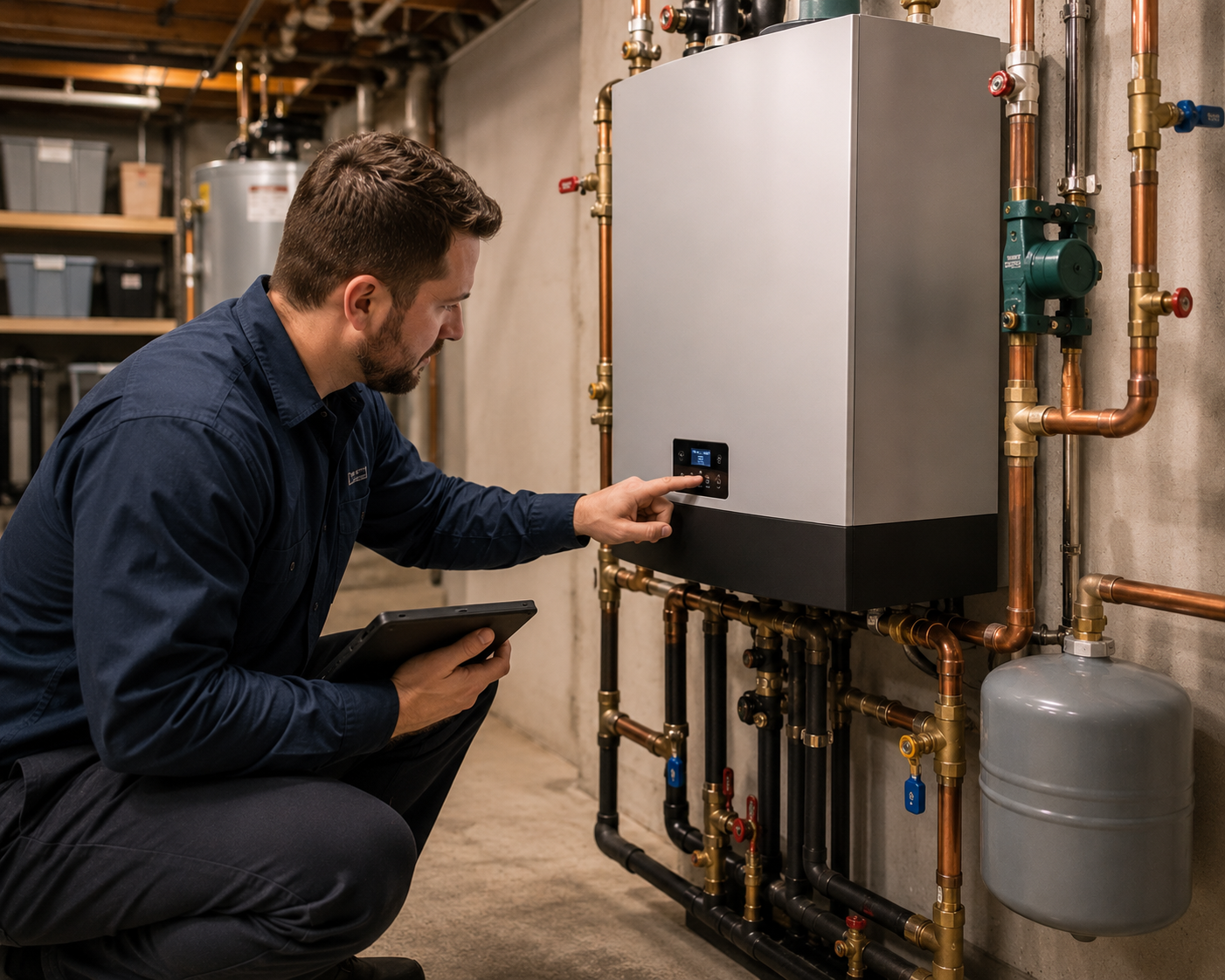
High-efficiency boiler installation for a Chicago residential heating system
What Questions Should You Ask Before Deciding?
Before authorizing a repair or replacement, ask your HVAC professional a few practical questions.
What Caused The Failure?
Knowing whether the problem is isolated or part of broader deterioration can change your decision.
What Condition Is The Rest Of The Boiler In?
A successful repair offers less value if another major component is close to failing.
Are Replacement Parts Readily Available?
Parts for older equipment may become harder or more expensive to source.
How Does The Current System’s Efficiency Compare With Available Replacements?
Consider potential operating savings alongside installation cost.
How Long Could The Repaired Boiler Reasonably Continue Operating?
No contractor can guarantee an exact lifespan, but an inspection can help determine whether the overall condition supports further investment.
These questions move the conversation beyond “How much is this repair?” toward a more useful question: “Which option offers better value for this property?”
Repair or Replace? Start With a Professional Boiler Assessment
No universal age or repair price means every boiler should automatically be replaced. A well-maintained system with an isolated problem may be worth repairing, while an aging boiler with repeated failures and declining efficiency may justify replacement.
The best decision starts with an accurate diagnosis.
Service Pro Titans provides heating and cooling services for residential and light commercial properties in Chicagoland. Whether you need boiler repair, replacement guidance, or a broader HVAC assessment, the goal is to select the solution that makes sense for your comfort, property, and long-term costs.
Visit www.serviceprotitans.com to schedule service and have your boiler evaluated before Chicago’s cold weather puts it to the test.