

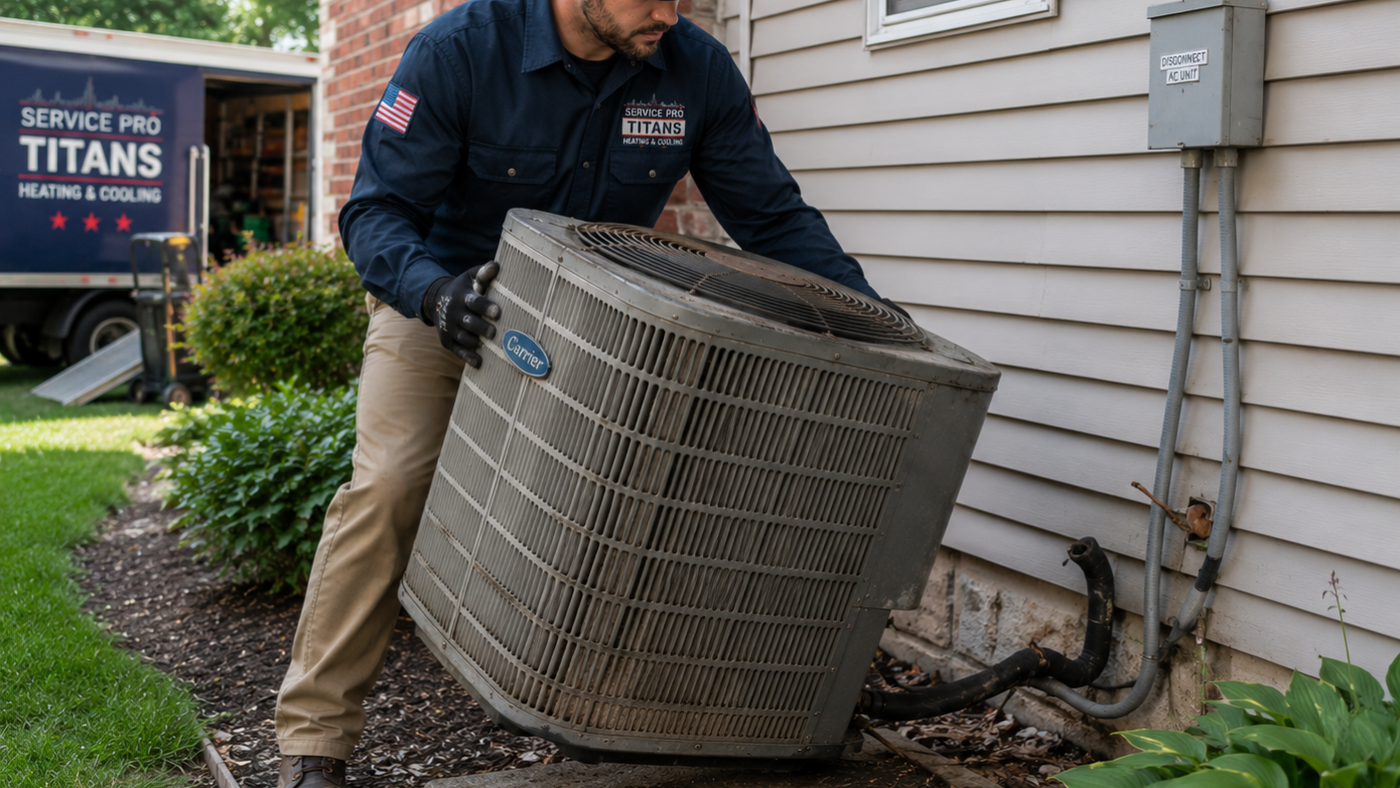
AC Installation Guide – What Homeowners Should Know Before Replacing Their System:
Replacing your home’s air conditioning system is a significant investment. While a new unit can improve comfort, reduce energy costs, and increase reliability, choosing the wrong system or installer can lead to higher utility bills, uneven cooling, and expensive repairs down the road.
If you’re considering replacing your current air conditioner, understanding the installation process before making a decision can help you get the best long-term value. Whether your existing system is nearing the end of its lifespan or struggling to keep up during Chicago’s hot summers, this guide covers everything homeowners should know before moving forward.
If you’re looking for reliable AC installation, choose Service Pro Titans for residential HVAC solutions. Working with experienced professionals can make the replacement process much smoother.
When Is It Time to Replace Your Air Conditioner?
Many homeowners wonder whether repairing their current system is enough or if replacement makes more financial sense.
Common signs that replacement may be the better option include:
- Your AC is 12 to 15 years old or older
- Frequent breakdowns requiring costly repairs
- Rising energy bills without increased usage
- Uneven temperatures throughout the home
- Excessive indoor humidity
- Strange noises or unpleasant odors
- Difficulty keeping the home comfortable during peak summer temperatures
According to the U.S. Department of Energy, replacing an older, inefficient air conditioner with a high-efficiency model can significantly reduce cooling energy consumption. This is especially true if the existing system is more than a decade old.
Understanding the AC Installation Process
Many homeowners only see the finished product, but proper installation involves much more than replacing one outdoor unit with another.
A professional installation typically includes:
- Evaluating your current HVAC system
- Performing a home load calculation
- Inspecting existing ductwork
- Checking electrical capacity
- Installing indoor and outdoor equipment
- Replacing refrigerant lines if necessary
- Testing airflow and refrigerant charge
- Verifying thermostat operation
- Performing final system performance testing
Skipping any of these steps can negatively affect efficiency, comfort, and equipment lifespan.
Why Proper System Sizing Matters
One of the biggest mistakes homeowners make is assuming that larger equipment cools better.
In reality, oversized air conditioners often:
- Turn on and off too frequently
- Remove less humidity
- Wear out components faster
- Waste electricity
- Create inconsistent indoor temperatures
Undersized systems present their own problems, including:
- Running continuously
- Struggling to cool down during extreme heat
- Higher operating costs
- Increased wear on compressors
Professional HVAC contractors use industry-approved load calculations, often referred to as Manual J calculations, to determine the appropriate system size for each home.
This ensures your new equipment matches your home’s:
- Square footage
- Insulation levels
- Window placement
- Air leakage
- Ceiling height
- Occupancy
Energy Efficiency Ratings Explained
Today’s air conditioners are far more efficient than systems installed 15 to 20 years ago.
The most common rating you’ll see is:
SEER2
Seasonal Energy Efficiency Ratio 2 (SEER2) measures cooling efficiency under updated testing standards.
Generally:
| SEER2 Rating | Efficiency |
| 13.4–14.3 | Meets minimum requirements |
| 15–17 | Higher efficiency |
| 18+ | Premium efficiency |
Higher-efficiency systems usually cost more initially but may lower monthly utility bills over time.
Your contractor can help determine which efficiency level provides the best balance between purchase price and operating costs.
Consider the Entire HVAC System
Replacing only the outdoor condenser isn’t always the best approach.
Depending on your home’s equipment, your contractor may recommend replacing:
- Indoor evaporator coil
- Furnace
- Air handler
- Thermostat
- Refrigerant lines
Matching indoor and outdoor components helps maximize efficiency and manufacturer warranty coverage.
Homeowners interested in upgrading both heating and cooling systems should discuss complete HVAC replacement options with Heating & Cooling in Chicago professionals before making a final decision.
Smart Thermostats Can Improve Comfort
Installing a new AC is an ideal time to upgrade your thermostat.
Modern smart thermostats offer benefits such as:
- Remote temperature control
- Energy usage tracking
- Learning schedules
- Vacation settings
- Smart home integration
- Maintenance reminders
According to the U.S. Environmental Protection Agency’s ENERGY STAR® program, properly programmed smart thermostats can help many households reduce heating and cooling costs.
Don’t Overlook Ductwork
Even the most efficient air conditioner cannot perform well if conditioned air leaks before reaching your living spaces.
Older homes around Chicago often have ductwork issues, such as:
- Air leaks
- Poor insulation
- Crushed ducts
- Improper sizing
- Restricted airflow
During installation, your contractor should inspect existing ducts and recommend repairs if necessary.
Improving airflow often delivers noticeable comfort improvements without increasing equipment size.
Choosing the Right Air Conditioner
Several factors influence which system is best for your home.
These include:
Single-Stage Systems
- Lower upfront cost
- Reliable operation
- Good option for budget-conscious homeowners
Two-Stage Systems
- Better humidity control
- More consistent temperatures
- Improved efficiency
Variable-Speed Systems
- Maximum comfort
- Extremely quiet operation
- Highest efficiency
- Better indoor humidity management
Many homeowners considering premium equipment choose American Standard HVAC systems because of their reputation for efficiency, durability, and comfort features.
HVAC technician installing a modern variable-speed indoor air handler connected to a residential cooling system.
Questions to Ask Before Hiring an HVAC Contractor
Choosing the installer is just as important as selecting the equipment.
Ask questions such as:
- Are you licensed and insured?
- Do you perform Manual J load calculations?
- Will permits be obtained if required?
- What warranties are included?
- What maintenance is recommended?
- How long will installation take?
- Will existing ductwork be inspected?
- Is financing available?
Professional contractors should also explain the installation process clearly rather than simply providing a price.
Working with experienced HVAC Professionals Chicago homeowners trust helps reduce the risk of installation problems later.
How Long Does Installation Take?
For most residential homes, replacing a central air conditioning system takes:
- One day for straightforward replacements
- Two days if ductwork, electrical work, or furnace replacement is involved
More complex installations may require additional time depending on the home’s layout and existing HVAC configuration.
Maintenance Protects Your Investment
A new air conditioner still requires regular maintenance to operate efficiently.
Annual service typically includes:
- Cleaning condenser coils
- Checking refrigerant levels
- Inspecting electrical components
- Cleaning condensate drains
- Replacing air filters
- Measuring airflow
- Testing system performance
Routine maintenance can help identify small issues before they become expensive repairs.
Homeowners can also extend system life by replacing air filters regularly and keeping outdoor units free of debris.
Should You Replace the Furnace at the Same Time?
Many Chicago homeowners replace both systems at the same time.
Benefits include:
- Matched equipment
- Improved efficiency
- One installation appointment
- Simplified warranty coverage
- Better airflow compatibility
If your furnace is approaching the same age as your air conditioner, discussing replacement options with Furnace Service & Installation Chicago experts may save money over the long term.
Homes with boiler heating should also evaluate whether existing equipment still meets household comfort needs. If repairs become frequent, consulting specialists in Boiler Service & Installation Chicago may be worthwhile.
Residential HVAC technician testing airflow after completing a full heating and cooling system installation in Chicago.
Why Professional Installation Matters
Research published by organizations such as the Air Conditioning Contractors of America (ACCA) has shown that installation quality plays a major role in HVAC system performance.
Improper installation may result in:
- Reduced efficiency
- Increased operating costs
- Shorter equipment lifespan
- More repairs
- Poor humidity control
- Reduced indoor comfort
Even premium equipment cannot deliver its intended performance if it is installed incorrectly.
Choosing an experienced contractor who follows industry best practices helps protect your investment for years to come.
Final Thoughts
Replacing your air conditioning system is about more than purchasing new equipment. Proper sizing, professional installation, quality components, and ongoing maintenance all contribute to reliable comfort and lower operating costs.
Whether you’re replacing an aging unit or planning ahead before your current system fails, taking the time to understand the installation process can help you make informed decisions that benefit your home for years to come.
If you’re looking for dependable AC Service & Installation in Chicago, or complete Heating & Cooling solutions in Chicagoland, visit www.serviceprotitans.com to learn more about professional installation, maintenance, and HVAC services tailored to your home’s needs.