

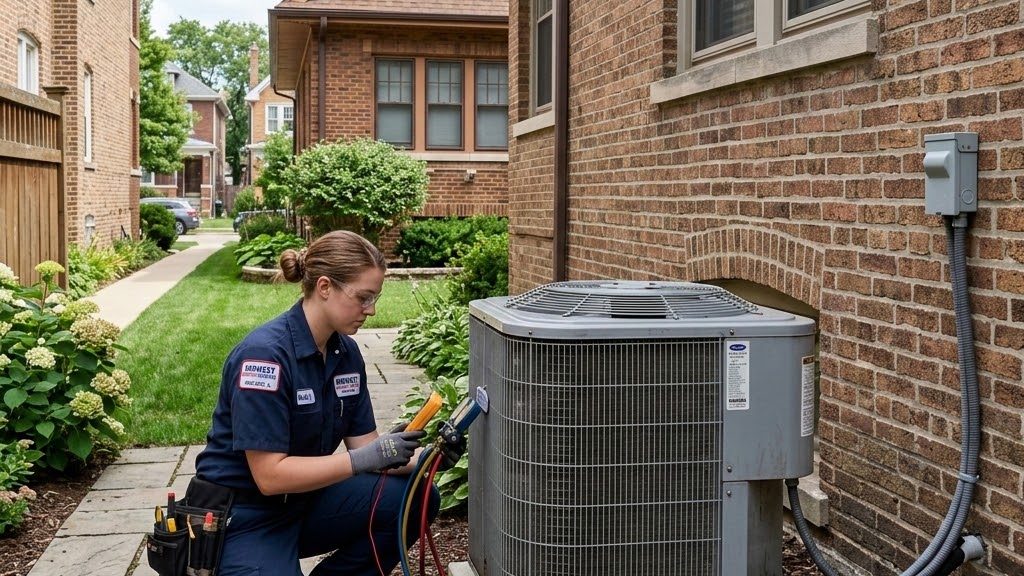
When summer temperatures rise in Chicago, a working air conditioner quickly goes from a convenience to a necessity. If your AC is running but your home still feels warm, uncomfortable, or humid, several issues could be causing the problem. Some are simple fixes homeowners can handle safely, while others require professional diagnosis and repair.
Understanding the most common reasons your AC is not cooling can help you avoid bigger repairs, lower energy costs, and restore comfort faster. In this guide, we’ll explain what may be happening with your system, the signs that indicate professional service is needed, and how regular maintenance can help prevent future cooling problems.
For homeowners looking for reliable Heating & Cooling in Chicago, knowing the warning signs early can make a major difference in both comfort and repair costs.
How Your Air Conditioning System Cools Your Home
Before looking at possible problems, it helps to understand how a residential AC system works.
Your air conditioner removes heat from indoor air and transfers it outside using several key components:
- Thermostat
- Air filter
- Evaporator coil
- Condenser coil
- Refrigerant
- Blower motor
- Compressor
According to the U.S. Department of Energy, proper airflow and refrigerant levels are essential for efficient cooling performance. Even a small issue with one component can reduce efficiency significantly.
When any part of the cooling cycle fails, your AC may continue running without actually lowering indoor temperatures.
Common Reasons Your AC Is Not Cooling
Dirty Air Filters Restrict Airflow
One of the most common causes of poor cooling is a dirty air filter.
When filters become clogged with dust, pet hair, and debris, airflow becomes restricted. This makes it harder for cool air to circulate through your home. In severe cases, limited airflow can even cause evaporator coils to freeze.
Signs of a dirty filter include:
- Weak airflow from vents
- Hot and cold spots in rooms
- Longer cooling cycles
- Increased utility bills
- Ice buildup on indoor components
Most HVAC professionals recommend replacing filters every 1–3 months, depending on household conditions.
If you notice reduced cooling, checking the air filter is usually the first step.
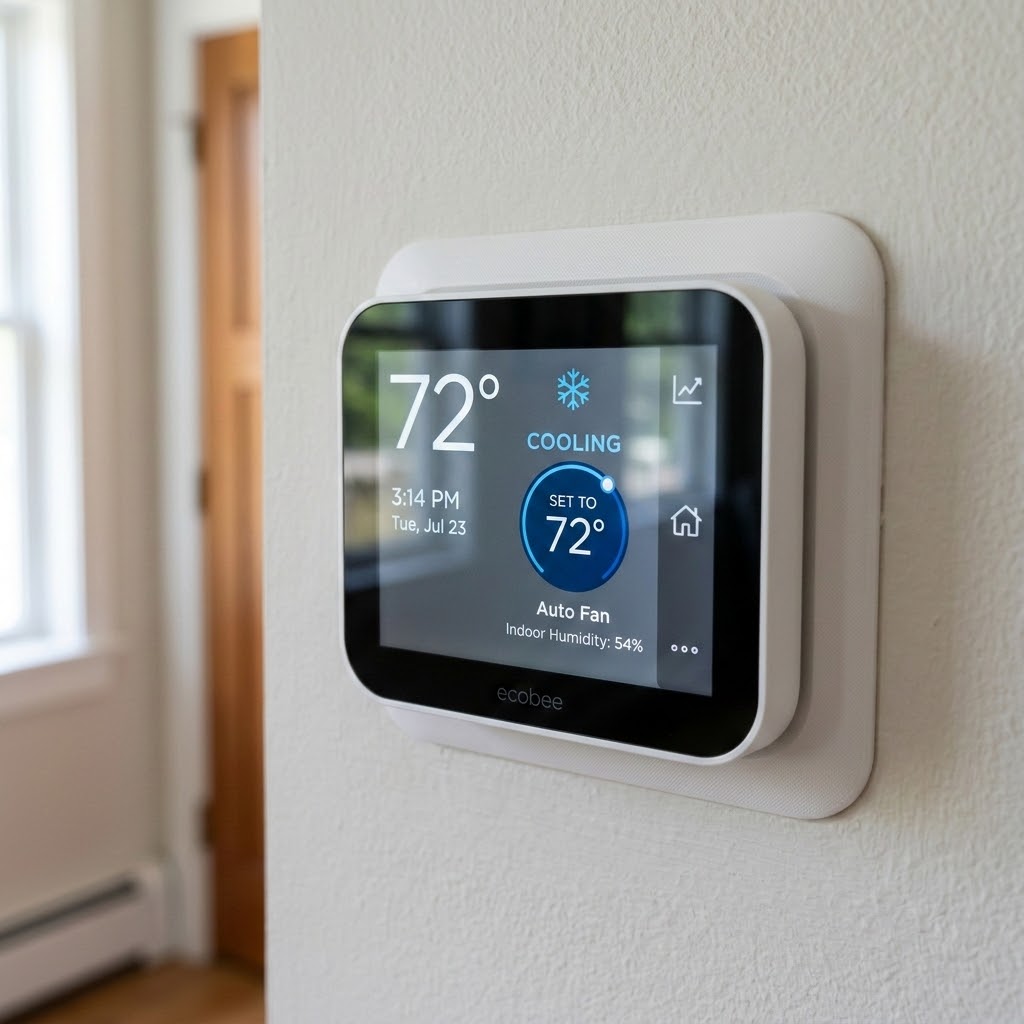
Thermostat Problems
Sometimes the issue is not the air conditioner itself but the thermostat controlling it.
Incorrect settings, dead batteries, faulty wiring, or calibration problems may prevent the system from cooling properly.
Check for these common thermostat issues:
- Thermostat accidentally set to “heat.”
- Fan set to “on” instead of “auto.”
- Incorrect temperature setting
- Blank display
- Unresponsive controls
Smart thermostats can also experience connectivity or programming problems that interfere with normal operation.
If resetting the thermostat does not resolve the issue, professional troubleshooting may be necessary.
Refrigerant Leaks
Refrigerant is responsible for absorbing and transferring heat from inside your home.
If refrigerant levels are low due to a leak, your AC cannot cool efficiently. Unlike fuel, refrigerant should not need replacement unless there is a system leak.
Common signs include:
- Warm air from vents
- Hissing sounds
- Ice on refrigerant lines
- Increased humidity indoors
- AC running continuously
The Environmental Protection Agency (EPA) notes that refrigerant leaks reduce efficiency and may damage compressors if ignored.
Because refrigerants must be handled safely and legally, this is always a job for licensed HVAC technicians like the team at Service Pro Titans.
Dirty Condenser Coils
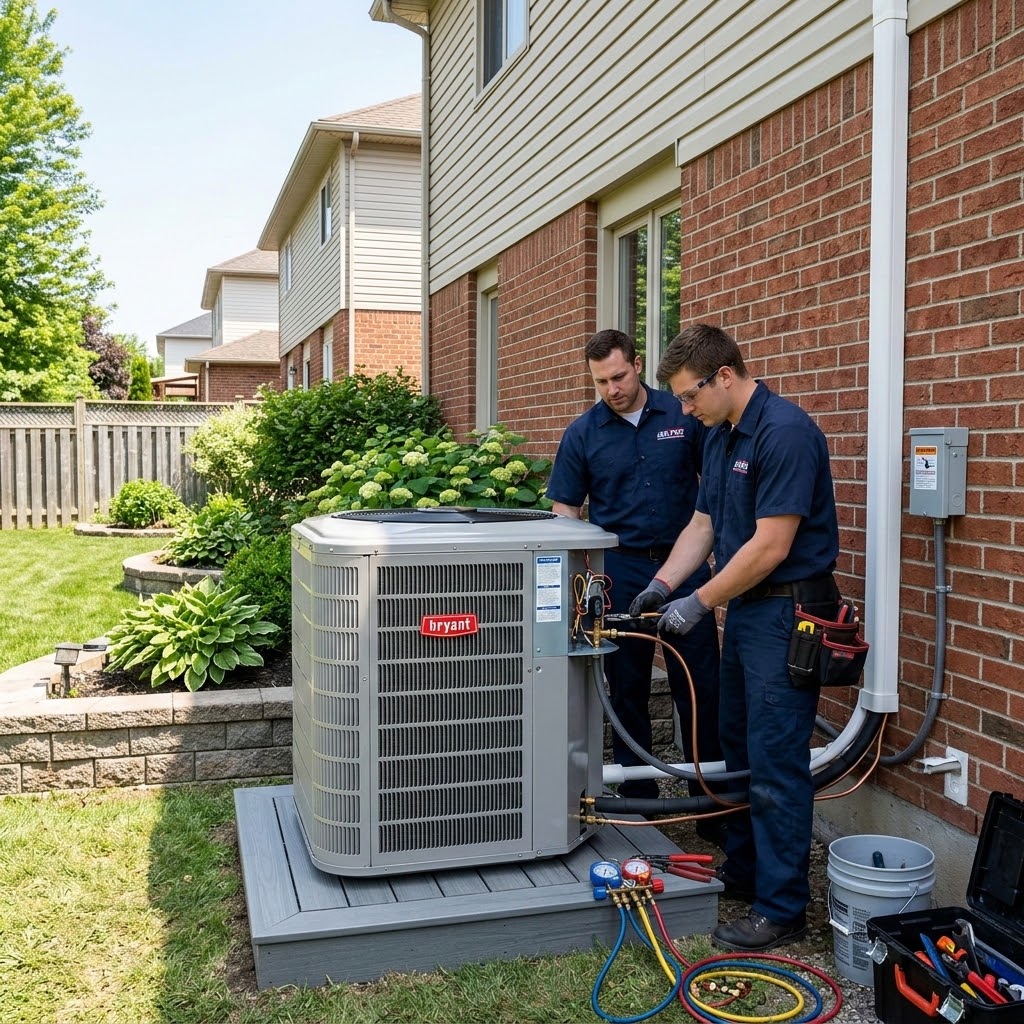
Your outdoor condenser unit releases heat collected from inside your home. Over time, dirt, leaves, grass clippings, and debris can block airflow around the coils.
When condenser coils become dirty, the system struggles to release heat effectively.
This can cause:
- Reduced cooling performance
- Higher energy bills
- Overheating
- System shutdowns
- Compressor strain
Homeowners can safely clear debris around the outdoor unit, but professional cleaning is recommended for deep buildup.
Maintaining at least two feet of clearance around the condenser helps improve airflow and efficiency.
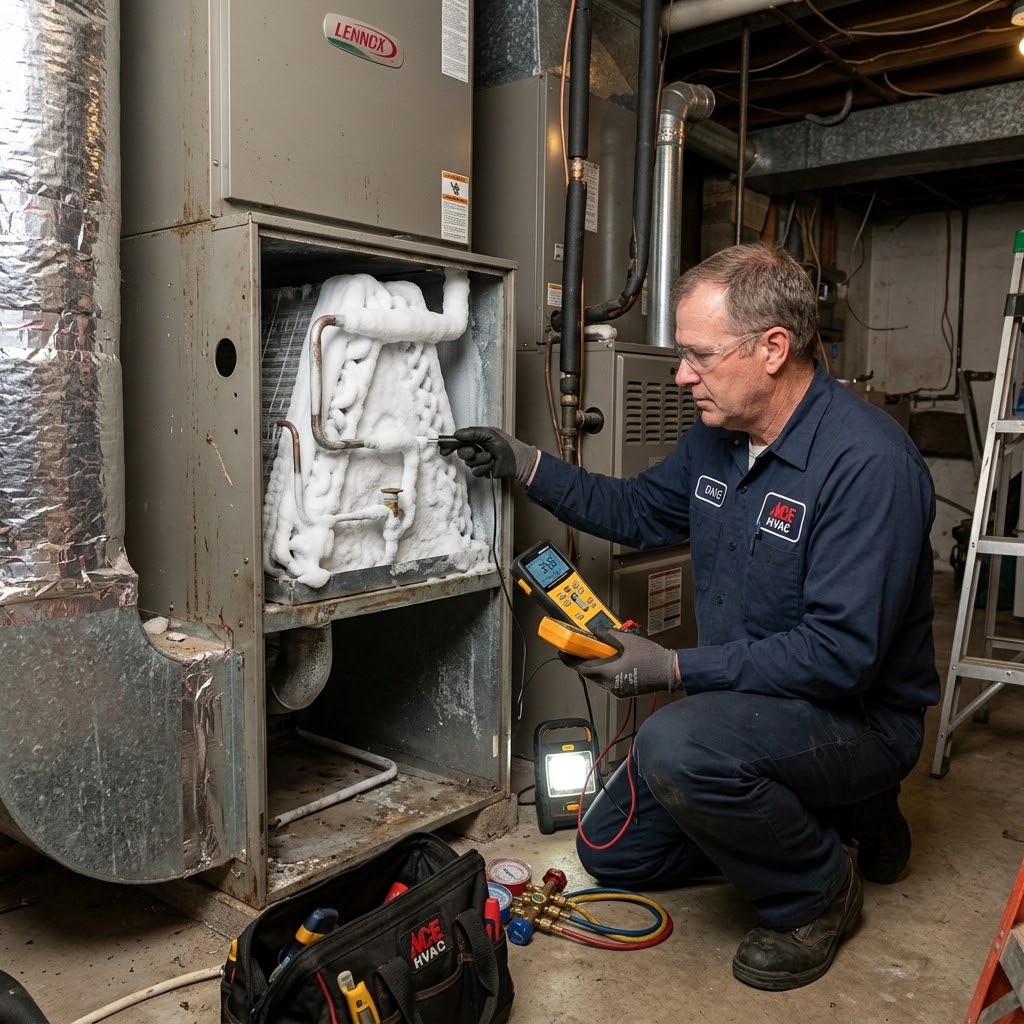
Frozen Evaporator Coils
Frozen evaporator coils prevent proper heat absorption, leaving your home warm even while the AC runs.
Several issues can lead to frozen coils:
- Dirty filters
- Low refrigerant
- Blocked vents
- Blower motor problems
- Restricted airflow
If you see ice buildup near indoor HVAC components, turn off the system immediately to prevent damage.
Allowing the unit to continue running while frozen can strain the compressor and lead to expensive repairs.
Professional inspection is often needed to identify the underlying cause.
Electrical or Capacitor Problems
Air conditioners rely on electrical components to start and operate correctly.
Capacitors help motors start efficiently, while contactors and relays regulate power flow throughout the system.
When electrical parts fail, you may notice:
- AC not turning on
- Clicking noises
- Short cycling
- Fan not spinning
- Intermittent cooling
Electrical repairs should always be handled by trained technicians due to safety risks and system complexity.
Working with experienced HVAC Professionals in Chicago can help homeowners prevent further damage during diagnosis and repair.
Ductwork Leaks or Airflow Problems
Even if your AC unit is functioning properly, damaged ductwork can prevent cool air from reaching living spaces efficiently.
According to Energy Star, leaky ducts can reduce HVAC efficiency by up to 20%.
Signs of duct issues include:
- Uneven temperatures
- Weak airflow
- Excess dust
- High utility bills
- Rooms that never cool properly
Professional duct inspections can identify leaks, poor insulation, or airflow restrictions that affect comfort.
When Your AC System Is Too Old
Air conditioners naturally lose efficiency with age.
Most residential systems last approximately 10–15 years, depending on maintenance, usage, and installation quality.
Older systems may experience:
- Frequent breakdowns
- Poor energy efficiency
- Inconsistent cooling
- Expensive repair costs
- Difficulty maintaining temperature
In some situations, replacing an outdated system may be more cost-effective than repeated repairs.
Homeowners considering upgrades may benefit from modern energy-efficient systems like American Standard HVAC equipment designed for improved performance and lower energy use.
Warning Signs You Should Call a Professional
Some AC issues can be resolved with simple maintenance, but certain warning signs require immediate professional attention.
Call an HVAC technician if you notice:
- Burning smells
- Electrical buzzing
- Refrigerant leaks
- Frozen coils
- Warm air despite thermostat adjustments
- Repeated breaker trips
- Water leaks around the system
- Sudden spikes in energy bills
- Complete system shutdown
Ignoring these problems can increase repair costs and shorten equipment lifespan.
Reliable AC Service & Installation Chicago providers can diagnose issues accurately and help prevent further damage.
How Regular Maintenance Helps Prevent Cooling Problems
Preventive maintenance remains one of the best ways to reduce AC breakdowns.
Routine service helps identify minor issues before they become expensive repairs.
Professional maintenance typically includes:
- Cleaning condenser coils
- Checking refrigerant levels
- Inspecting electrical components
- Testing airflow
- Replacing filters
- Calibrating thermostats
- Inspecting condensate drains
The Department of Energy reports that regular HVAC maintenance can improve energy efficiency and extend equipment lifespan.
For homeowners in Chicago’s demanding climate, seasonal maintenance is especially important due to heavy summer usage.
Why Chicago Weather Can Stress HVAC Systems
Chicago weather creates unique challenges for heating and cooling equipment.
During summer, systems often operate continuously through:
- High humidity
- Heat waves
- Rapid temperature swings
- Heavy cooling demand
These conditions increase wear on compressors, motors, and electrical systems.
Many homeowners also rely on the same HVAC infrastructure year-round for both cooling and winter heating. Regular servicing of both systems helps ensure reliable operation throughout every season.
That’s why many property owners trust providers offering both Furnace Service & Installation Chicago and Boiler Service & Installation Chicago alongside air conditioning repairs.
Tips to Improve AC Performance at Home
While professional service is sometimes necessary, homeowners can take several steps to improve cooling efficiency:
- Replace filters regularly
- Keep vents unobstructed
- Seal air leaks around windows and doors
- Use ceiling fans to improve airflow
- Keep blinds closed during peak sunlight
- Schedule annual HVAC maintenance
- Clear debris around outdoor units
These small actions can help reduce strain on your system and improve indoor comfort during peak summer temperatures.
Conclusion
When your AC is not cooling properly, the problem may range from a simple airflow issue to a more serious mechanical failure. Understanding the most common causes can help you respond quickly and avoid larger repair costs later.
If your system continues struggling to keep your home comfortable, a professional diagnosis is often the safest and most effective solution. Whether you need maintenance, repairs, or a full system replacement, working with experienced technicians helps protect your investment and restore comfort faster.
For trusted Heating & Cooling Chicagoland services, visit www.serviceprotitans.com to schedule an inspection or learn more about residential and light commercial HVAC solutions in Chicago.